

Royal Enfield
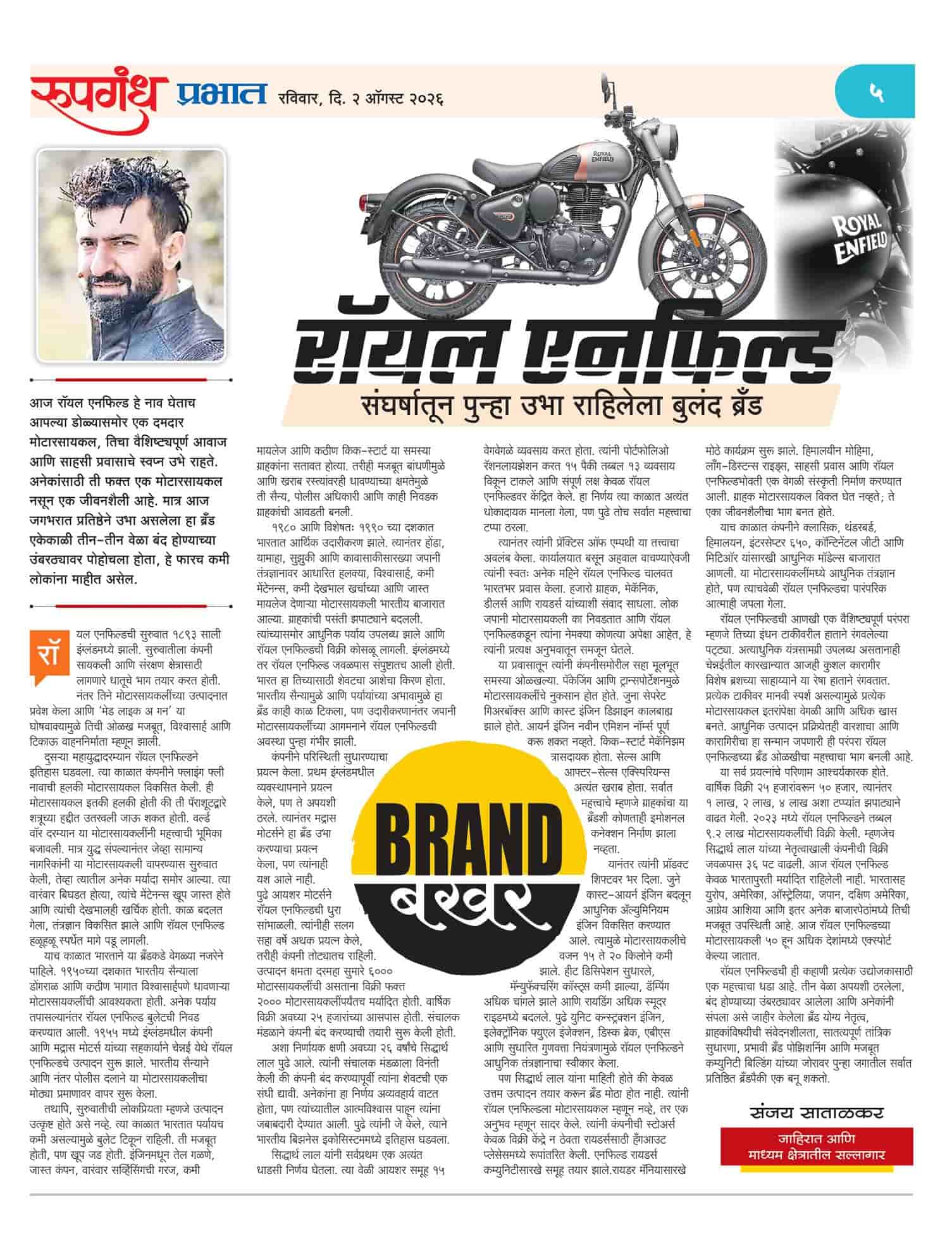
Royal Enfield – A Powerful Brand That Rose Again After Repeated Failures
Today, the moment we hear the name Royal Enfield, we imagine a powerful motorcycle, its unique exhaust sound, and the dream of adventurous journeys. For many people, it is much more than just a motorcycle it is a lifestyle. However, very few people know that this globally respected brand had reached the verge of shutting down not once, but three times.
Royal Enfield was founded in 1893 in England. Initially, the company manufactured bicycles and metal components for the defence industry. Later, it entered motorcycle manufacturing. With its famous slogan “Made Like a Gun,” the company earned a reputation for producing strong, reliable, and durable motorcycles.
During the Second World War, Royal Enfield created history by developing a lightweight motorcycle called the Flying Flea. It was so light that it could be dropped by parachute into enemy territory. These motorcycles played an important role during the war. However, after the war ended and civilians started using them, several shortcomings became apparent. They were heavy, frequently broke down, required regular maintenance, and were expensive to maintain. As technology advanced over time, Royal Enfield slowly started losing its competitive edge.
Around the same period, India looked at the brand differently. In the 1950s, the Indian Army needed reliable motorcycles that could perform well in hilly and difficult terrains. After evaluating several options, the Royal Enfield Bullet was selected. In 1955, Royal Enfield, in partnership with Madras Motors, started manufacturing motorcycles in Chennai. The Indian Army, followed by the police force, began using these motorcycles extensively.
However, early popularity did not necessarily mean the product was excellent. At that time, there were very few alternatives available in India. The Bullet was strong but extremely heavy. Customers often faced problems such as oil leakage, excessive vibration, frequent servicing, poor fuel efficiency, and a difficult kick-start mechanism. Even with these drawbacks, its rugged construction and ability to handle rough roads made it a favourite among the Army, police officers, and a select group of customers.
During the 1980s and especially the 1990s, India underwent economic liberalisation. Soon, Japanese motorcycles from companies like Honda, Yamaha, Suzuki, and Kawasaki entered the Indian market. These motorcycles were lighter, more reliable, required less maintenance, had lower running costs, and offered better fuel efficiency. Customer preferences changed rapidly. Modern alternatives became available, and Royal Enfield’s sales declined sharply.
In England, Royal Enfield had almost disappeared. India remained its last ray of hope. For some time, the brand survived because of army orders and the lack of alternatives. But after liberalisation and the arrival of Japanese motorcycles, Royal Enfield once again found itself in serious trouble.
The company made several attempts to recover. First, the management in England tried but failed. Then Madras Motors attempted to revive the brand, but they too could not succeed. Later, Eicher Motors took over the responsibility of Royal Enfield. Even after six years of continuous efforts, the company continued to suffer losses. Although the factory had the capacity to produce around 6,000 motorcycles every month, it was selling only 2,000 units. Annual sales were around 25,000 motorcycles, and the Board of Directors had started preparing to shut down the company.
At this critical stage, 26-year-old Siddhartha Lal stepped forward. He requested the Board to give him one final opportunity before closing the company. Many people felt his decision was unrealistic, but his confidence convinced them to give him the responsibility. What he did next became a remarkable chapter in Indian business history.
Siddhartha Lal’s first bold decision was to completely restructure the Eicher Group. At that time, Eicher was involved in 15 different businesses. He sold 13 of those businesses and decided to focus entirely on Royal Enfield. This was considered a highly risky decision, but it eventually proved to be the turning point for the company.
Next, he followed the principle of “Practice of Empathy.” Instead of sitting in an office and reading reports, he personally rode Royal Enfield motorcycles across India for several months. He interacted with thousands of customers, mechanics, dealers, and riders. This helped him understand why people preferred Japanese motorcycles and what customers truly expected from Royal Enfield.
During this journey, he identified six major problems:
- Motorcycles were getting damaged during packaging and transportation.
- The old separate gearbox and cast-iron engine design had become outdated.
- The iron engine could not meet new emission standards.
- The kick-start mechanism was inconvenient.
- Sales and after-sales service were poor.
- Most importantly, customers had no emotional connection with the brand.
After identifying these issues, the company focused on transforming its products. The old cast-iron engine was replaced with a modern aluminium engine, reducing the motorcycle’s weight by 15–20 kilograms. Heat dissipation improved, manufacturing costs came down, vibration reduced, and the riding experience became much smoother.
Later, the company introduced Unit Construction Engines (UCE), Electronic Fuel Injection (EFI), disc brakes, ABS, and better quality control systems. Royal Enfield successfully adopted modern technology while improving overall product quality.
However, Siddhartha Lal knew that a great product alone could not build a great brand. He positioned Royal Enfield not merely as a motorcycle but as an experience. Company stores were transformed from simple showrooms into places where riders could meet and connect. Rider communities were created, large events like Rider Mania were organised, and Himalayan expeditions, long-distance rides, and adventure tours became part of the brand experience. Customers were no longer just buying a motorcycle—they were becoming part of a lifestyle.
During this period, the company introduced several successful models, including the Classic, Thunderbird, Himalayan, Interceptor 650, Continental GT, and Meteor. These motorcycles combined modern technology with Royal Enfield’s timeless heritage and character.
Another unique tradition of Royal Enfield is the hand-painted pinstripes on its fuel tanks. Even though modern automated machinery is available, skilled craftsmen at the Chennai factory still paint these lines by hand using special brushes. Because each fuel tank receives a human touch, every motorcycle becomes slightly different and more special than the others. This commitment to craftsmanship and heritage has become an important part of the Royal Enfield brand identity.
The results of all these efforts were remarkable. Annual sales increased from 25,000 to 50,000, then to 100,000, 200,000, 400,000, and continued growing rapidly. In 2023, Royal Enfield sold approximately 920,000 motorcycles. Under Siddhartha Lal’s leadership, the company’s sales increased by nearly 36 times.
Today, Royal Enfield is no longer limited to India. It has established a strong presence in Europe, the United States, Australia, Japan, South America, Southeast Asia, and several other international markets. Today, Royal Enfield motorcycles are exported to more than 50 countries around the world.
The story of Royal Enfield offers an important lesson for every entrepreneur. A brand that failed three times, came close to shutting down, and was written off by many people, managed to become one of the world’s most respected motorcycle brands again. This turnaround was made possible through strong leadership, genuine understanding of customers, continuous technological improvements, effective brand positioning, and the creation of a passionate community around the brand.
Author: Sanjay Satalkar
Advertising and Marketing Consultant