

Maggi
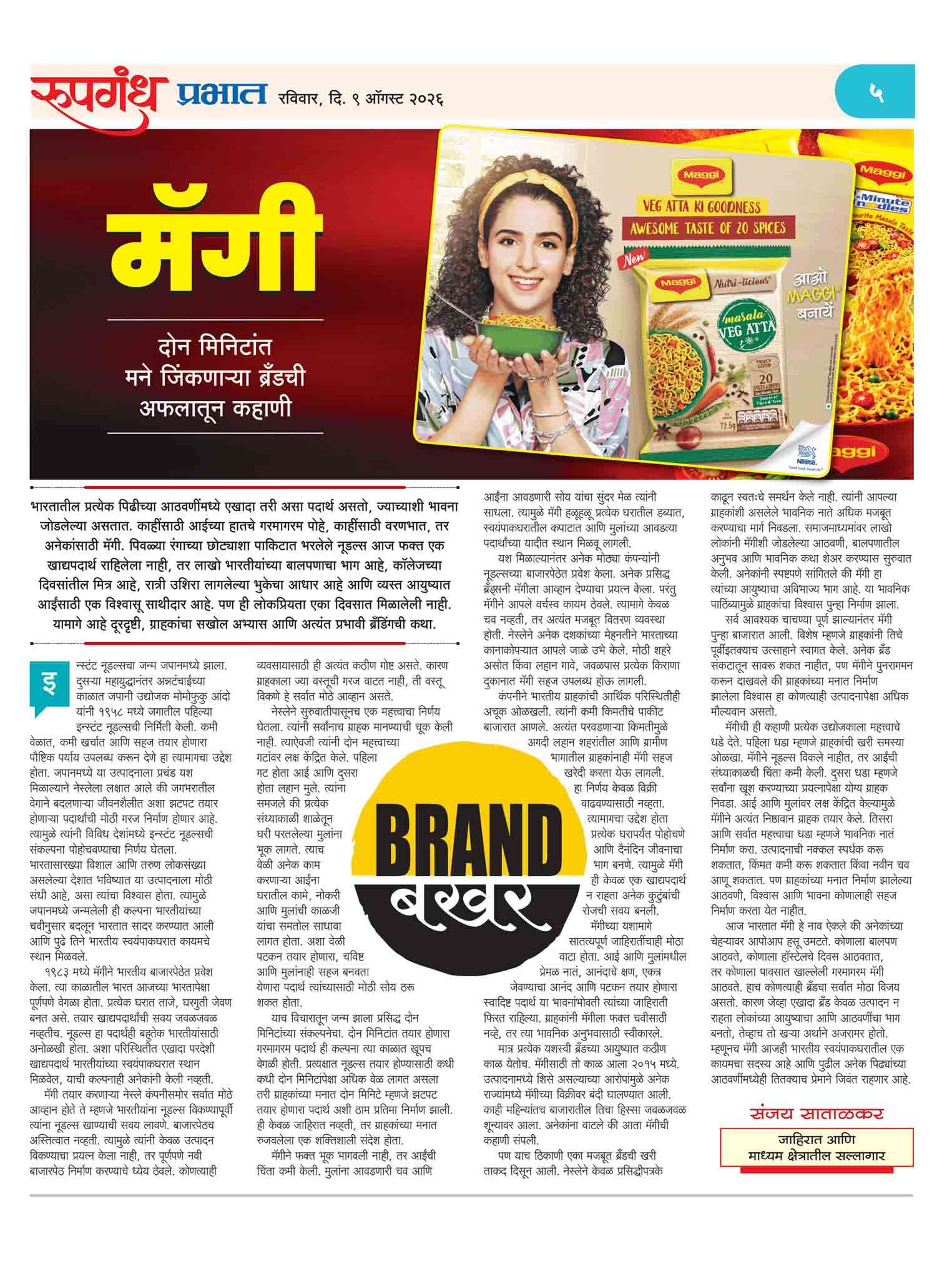
Maggi – The Amazing Story of the Brand That Won India in Just Two Minutes
Every generation in India has at least one food item that is closely connected with emotions. For some, it is a plate of hot poha made by their mother. For others, it is simple dal-rice. But for millions of Indians, it is Maggi. Packed inside a small yellow packet, Maggi noodles are no longer just a food product. They are a part of the childhood of millions, a companion during college days, a comfort during late-night hunger, and a trusted helper for busy mothers. However, this popularity was not achieved overnight. Behind it lies a story of vision, deep customer understanding, and brilliant branding.
The journey of instant noodles began in Japan. After the Second World War, when Japan was facing a severe food shortage, Japanese entrepreneur Momofuku Ando created the world’s first instant noodles in 1958. His objective was to provide a nutritious meal that could be prepared quickly, easily, and at a low cost. The product became a huge success in Japan, and Nestlé realized that with changing lifestyles around the world, there would soon be a growing demand for quick and convenient meals. The company decided to introduce the concept of instant noodles in different countries. They believed that a large and young country like India offered tremendous future potential. So, the idea that was born in Japan was adapted to suit Indian tastes and introduced in India, where it eventually earned a permanent place in Indian kitchens.
In 1983, Maggi entered the Indian market. India at that time was completely different from what it is today. Every household prepared fresh home-cooked meals every day. Ready-to-eat food products were almost unknown. Even noodles were unfamiliar to most Indians. In such an environment, very few people believed that a foreign food product could become a part of Indian kitchens.
The biggest challenge for Nestlé was not simply selling noodles. It first had to teach Indians to eat noodles. There was no existing market for the product. Instead of only trying to sell a product, the company decided to create an entirely new market. This is one of the most difficult tasks in business because selling something that customers do not even feel they need is always the biggest challenge.
From the very beginning, Nestlé made one important decision. It did not try to target everyone. Instead, it focused on two key customer groups—mothers and children. The company understood that children came home from school every evening feeling hungry. At the same time, many working mothers had to balance household responsibilities, jobs, and childcare. A meal that was quick to prepare, tasty, and simple enough for children to make themselves could become a perfect solution for them.
This thinking gave birth to the famous “2-Minute” concept. The idea of preparing a hot meal in just two minutes was completely new at that time. In reality, the noodles sometimes took a little longer than two minutes to cook. However, in the minds of customers, “2 Minutes” became a symbol of speed and convenience. It was not just an advertisement—it was a powerful message that stayed in people’s minds.
Maggi did more than satisfy hunger. It reduced the daily worries of mothers. It successfully combined a taste that children loved with the convenience that mothers appreciated. As a result, Maggi gradually found its place in school lunch boxes, kitchen shelves, and the list of every child’s favourite foods.
After Maggi became successful, many large companies entered the noodles market. Several well-known brands tried to challenge its leadership. Yet Maggi continued to dominate. The reason was not just its taste but also its extremely strong distribution network. Over several decades, Nestlé built an extensive supply chain that reached every corner of India. Whether in large cities or small villages, Maggi became easily available in almost every grocery store.
The company also understood the financial conditions of Indian consumers very well. It introduced low-priced packs into the market. Their affordable pricing allowed even customers from small towns and rural areas to buy Maggi easily. This decision was not made only to increase sales. The real objective was to reach every household and become a part of everyday life. As a result, Maggi became more than just a food product—it became a daily habit for millions of families.
Consistent advertising also played a major role in Maggi’s success. Its campaigns focused on the loving relationship between mothers and children, happy family moments, the joy of eating together, and the convenience of preparing a delicious meal quickly. Consumers accepted Maggi not only for its taste but also for the emotional experience associated with it.
However, every successful brand faces difficult times. For Maggi, that difficult phase came in 2015. After allegations that the product contained excessive lead, the sale of Maggi was banned in several states across India. Within a few months, its market share almost dropped to zero. Many people believed that Maggi’s story had come to an end.
But this was where the true strength of a powerful brand became visible. Nestlé did not depend only on press releases to defend itself. Instead, it chose to strengthen its emotional connection with customers. Millions of people shared their memories, childhood experiences, and emotional stories about Maggi on social media. Many openly said that Maggi had become an inseparable part of their lives. This emotional support helped rebuild customer trust.
After successfully completing all the required safety tests, Maggi returned to the market. Remarkably, customers welcomed it back with the same enthusiasm as before. Many brands never recover from such a crisis, but Maggi proved that the trust built in customers’ minds is far more valuable than any product itself.
The story of Maggi teaches every entrepreneur some valuable lessons. The first lesson is to identify the real problem of your customers. Maggi did not simply sell noodles—it reduced the evening worries of busy mothers. The second lesson is to choose the right customers instead of trying to satisfy everyone. By focusing on mothers and children, Maggi built an extremely loyal customer base. The third and most important lesson is to create an emotional connection. Competitors can copy a product, reduce prices, or introduce new flavours. But they cannot easily recreate the memories, trust, and emotions that customers associate with a brand. Even today, when Indians hear the name Maggi, a smile automatically appears on many faces. Some remember their childhood, some recall their hostel days, while others remember enjoying a hot bowl of Maggi on a rainy day. That is the greatest victory any brand can achieve. When a brand becomes more than just a product and becomes a part of people’s lives and memories, it achieves true immortality. That is why Maggi continues to be a permanent member of Indian kitchens and will continue to live with the same affection in the memories of future generations.
Author: Sanjay Satalkar
Advertising and Marketing Consultant