

Harley-Davidson
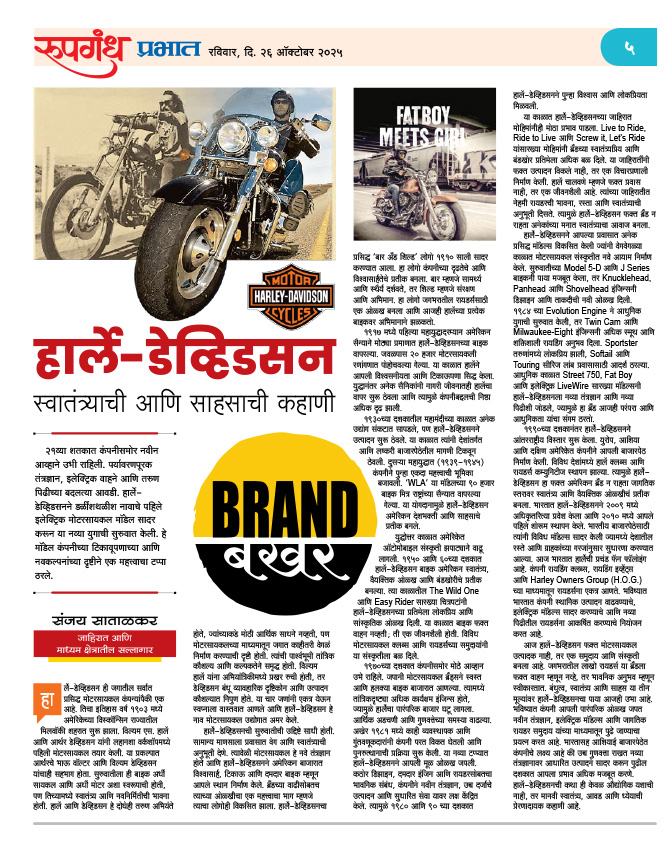
Harley-Davidson: A Story of Freedom and Adventure
Harley-Davidson is one of the most iconic motorcycle companies in the world. Its journey began in 1903 in Milwaukee, Wisconsin, USA. William S. Harley and Arthur Davidson built their first motorcycle in a small workshop, joined by Arthur’s brothers, Walter and William Davidson. The first bike was half bicycle and half motor, yet it embodied a spirit of freedom and innovation. Both Harley and Davidson were young engineers with limited financial resources but a visionary dream to create something extraordinary through motorcycles. Their background was rich in technical skill and imagination—William Harley was deeply passionate about engineering, while the Davidson brothers were experts in practical production. Together, the four brought their dream to life and immortalized the name “Harley-Davidson” in the motorcycle industry.
The initial goal of Harley-Davidson was simple to give the common man a sense of speed and freedom during travel. At that time, motorcycles were a new technology, and Harley-Davidson quickly established its reputation in the American market as a reliable, durable, and powerful bike. Along with the brand’s growth, its identity was shaped significantly by its logo. The famous “Bar and Shield” logo was introduced in 1910. The bar symbolized strength and stability, while the shield represented protection and pride. This logo became a symbol recognized by riders around the world and is still proudly displayed on every Harley motorcycle today.
During World War I in 1917, the American military used Harley-Davidson motorcycles extensively. Nearly 20,000 bikes were delivered to battlefields. This period established the brand’s credibility and durability. After the war, many soldiers continued using Harley motorcycles in civilian life, further deepening brand loyalty.
In the Great Depression of the 1930s, many industries collapsed, yet Harley-Davidson continued production, meeting domestic and military demand. During World War II (1939–1945), the company again played a major role. The “WLA” model was widely used by Allied forces, with 90,000 units produced. This cemented Harley-Davidson’s image as a symbol of American patriotism and adventure.
In the post-war era, American automobile culture surged. In the 1950s and 60s, Harley-Davidson became an icon of freedom, individuality, and rebellion. Films like The Wild One and Easy Rider made Harley a part of American pop culture. The motorcycle was no longer just a machine—it was a lifestyle. Motorcycle clubs and riding communities strengthened this culture.
The 1970s brought serious challenges. Japanese motorcycle brands entered the market with cheaper, lighter, and technologically advanced bikes. Harley’s traditional market began to shrink due to quality issues and financial difficulties. Eventually, in 1981, a group of managers and investors bought back the company and began its revival. During this phase, Harley-Davidson retained its original identity—rugged design, powerful engines, and deep emotional connection with riders. With a renewed focus on technology, quality manufacturing, and customer service, the brand regained popularity in the 1980s and 90s.
Harley-Davidson’s advertising campaigns during this time made a powerful impact. Slogans such as “Live to Ride, Ride to Live” and “Screw it, Let’s Ride” not only promoted the product but also portrayed a philosophy. Riding a Harley was not just about travel—it was a way of life. The ads reflected the emotions of the rider, the road, and the spirit of freedom. Harley-Davidson became “the voice of freedom” in the hearts of millions.
Throughout its journey, the company developed iconic models that redefined motorcycle culture in different eras. Early Model 5-D and J Series laid the foundation, while engines like Knucklehead, Panhead, and Shovelhead brought new identity to power and design. The 1984 Evolution Engine marked the beginning of the modern age, followed by the Twin Cam and Milwaukee-Eight engines that provided smoother and more powerful riding experiences. The Sportster became popular among youth, while the Softail and Touring series were ideal for long-distance travel. In the modern era, models like the Street 750, Fat Boy, and electric LiveWire connected Harley with new technology and the younger generation, blending tradition with innovation.
After the 1990s, Harley-Davidson expanded internationally in Europe, Asia, and South America. Harley clubs and rider communities were established globally. The brand transformed from being purely American to a worldwide symbol of freedom and individuality. In India, Harley-Davidson officially entered in 2009 and opened its first showroom in 2010. They introduced models tailored to Indian roads and customer needs. Today, Harley enjoys a massive fan following in India through riding clubs, events, and the Harley Owners Group (H.O.G.). The company plans to increase local manufacturing, introduce electric models, and attract the next generation of riders in India.
In the 21st century, Harley-Davidson faces new challenges—environmental sustainability, electric vehicles, and changing preferences of the younger generation. With its first electric motorcycle, LiveWire, the company marked a new era of innovation and sustainability.
Today, Harley-Davidson is not just a motorcycle manufacturer—it is a culture and a community. Millions of riders across the world consider it not just a vehicle, but an emotional experience. Brotherhood, freedom, and adventure remain the three core values that define Harley-Davidson. While preserving its legacy, the company is moving forward with new technology, electric models, and a growing global community of riders. Its goal, especially in Asian markets including India, is to strengthen its presence over the next decade by introducing high-quality, technologically advanced products. The story of Harley-Davidson is not just one of industrial success but an inspiring tale of human freedom, passion, and purpose.
Author: Sanjay Satalkar
Consultant in Advertising and Marketing