
AI Search vs Google: How SEO is changing in 2026
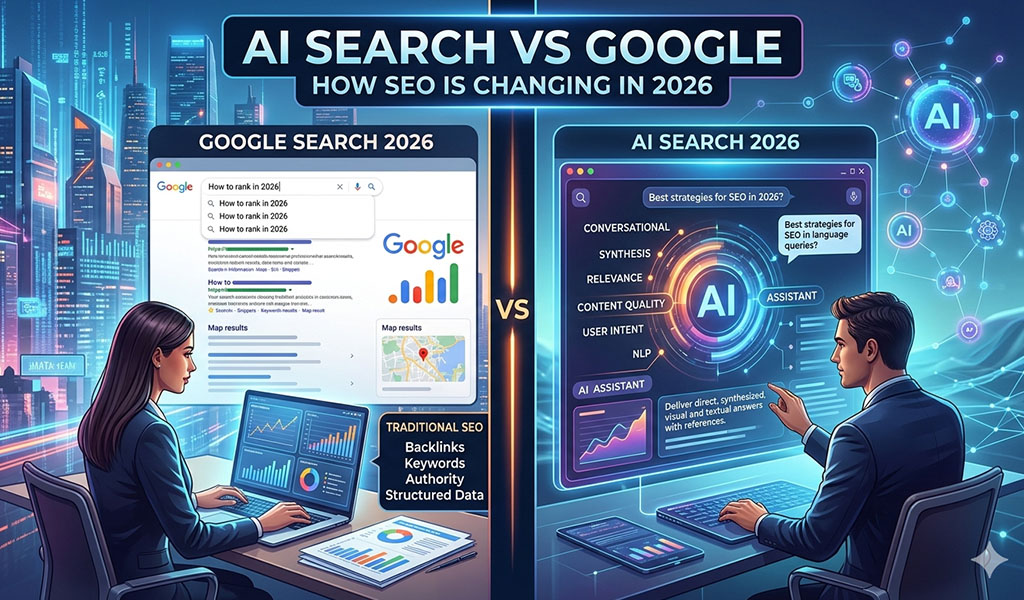
AI Search vs Google: How SEO is changing in 2026
Search is evolving faster than ever. For years,Search Engine Optimization (SEO) was largely about ranking web pages on Google through keywords, backlinks, and technical improvements. But in 2026, search is undergoing a major shift. Artificial Intelligence is transforming how people search, how answers are delivered, and how businesses get discovered online.
AI-powered search tools are now capable of understanding context, intent, and conversation. Instead of simply showing a list of links, search engines increasingly provide direct answers, summaries, and recommendations. This shift is redefining the role of SEO and forcing businesses to rethink their digital strategy.
Let’s explore how AI search, zero-click results, and conversational queries are reshaping SEO in 2026.
The Rise of AI-Powered Search
Search engines today rely heavily on artificial intelligence to interpret queries and deliver relevant results. AI models can analyze vast amounts of information from multiple sources and provide a concise answer directly on the search page.
Instead of typing short keywords like “best digital marketing agency Pune,” users now ask complete questions such as:
“Which digital marketing agency in Pune is best for lead generation campaigns?”
AI systems interpret the intent behind the query and generate a summarized response using data from multiple websites. This means users often receive the information they need without clicking on individual links.
For businesses, this represents both an opportunity and a challenge. While AI summaries can highlight trusted sources, they also reduce traditional website clicks.
Zero-Click Searches Are Increasing
One of the biggest changes in modern SEO is the rise of zero-click searches. These occur when users find their answer directly on the search results page without visiting any website.
Examples include:
• AI-generated summaries
• Featured snippets
• Knowledge panels
• Instant answers
• Maps and product listings
In many cases, the search engine itself becomes the destination.
For marketers and businesses, this means the goal is no longer just ranking first on Google. Instead, the focus is shifting toward becoming a trusted source that AI systems reference in their summaries.
Content must be structured clearly so that search engines can easily extract key insights.
Conversational Search Is Changing User Behavior
Voice assistants and AI chat interfaces are changing the way people search online. Queries are becoming longer, more natural, and more conversational.
Traditional search query:
“SEO trends 2026”
Conversational search query:
“What are the most important SEO trends businesses should follow in 2026?”
This shift means that content must be written in a way that answers real questions rather than simply targeting keywords.
Websites that provide clear explanations, helpful guides, and well-structured information are more likely to be referenced by AI search systems.
SEO Is Moving From Keywords to Intent
In earlier SEO strategies, keywords were the primary focus. Today, search engines are much better at understanding the intent behind a query.
AI analyzes:
• Search context
• User behavior
• Previous queries
• Location and device
• Content quality
Because of this, simply repeating keywords in an article is no longer effective. Content must genuinely solve the user’s problem.
The best-performing pages are those that provide complete, trustworthy, and easy-to-understand answers.
Authority and Trust Are More Important Than Ever
As AI search systems generate summaries from multiple sources, they prioritize websites that demonstrate expertise and credibility.
Factors influencing trust include:
• Well-researched content
• Author expertise
• Reliable data and references
• Strong domain reputation
• Consistent content quality
Businesses that invest in high-quality, informative content will have a better chance of being cited in AI-generated answers.
Structured Content Matters More in AI Search
Search engines rely on structured information to understand and extract data from webpages.
Effective content now includes:
• Clear headings and subheadings
• Short paragraphs
• Bullet points
• FAQ sections
• Schema markup and structured data
These elements help AI models interpret and present content more effectively.
How Businesses Should Adapt Their SEO Strategy
The changing search landscape means businesses must evolve their SEO approach.
Successful strategies in 2026 include:
1. Focus on Topic Authority
Instead of isolated blog posts, create comprehensive content hubs around important topics.
2. Write for Humans First
Content should answer real questions in a clear and helpful way.
3. Optimize for AI Summaries
Deliver clear, bite-sized insights that search engines can easily interpret and surface.
4. Use structured content with
organized formatting improves visibility in AI search results.
5. Build Brand Credibility
Strong brands are more likely to be referenced by AI systems.
The Future of SEO in the AI Era
SEO is not disappearing. It is evolving.
While AI search reduces traditional clicks in some cases, it also creates new opportunities for brands that provide valuable information. Businesses that focus on expertise, clarity, and helpful content will continue to benefit from organic visibility.
In the coming years, SEO will shift from simply optimizing pages to building knowledge and authority across the web.
Companies that adapt early will not only remain visible in AI search results but also build stronger digital trust with their audiences.