

Content Strategy Beyond Calendars
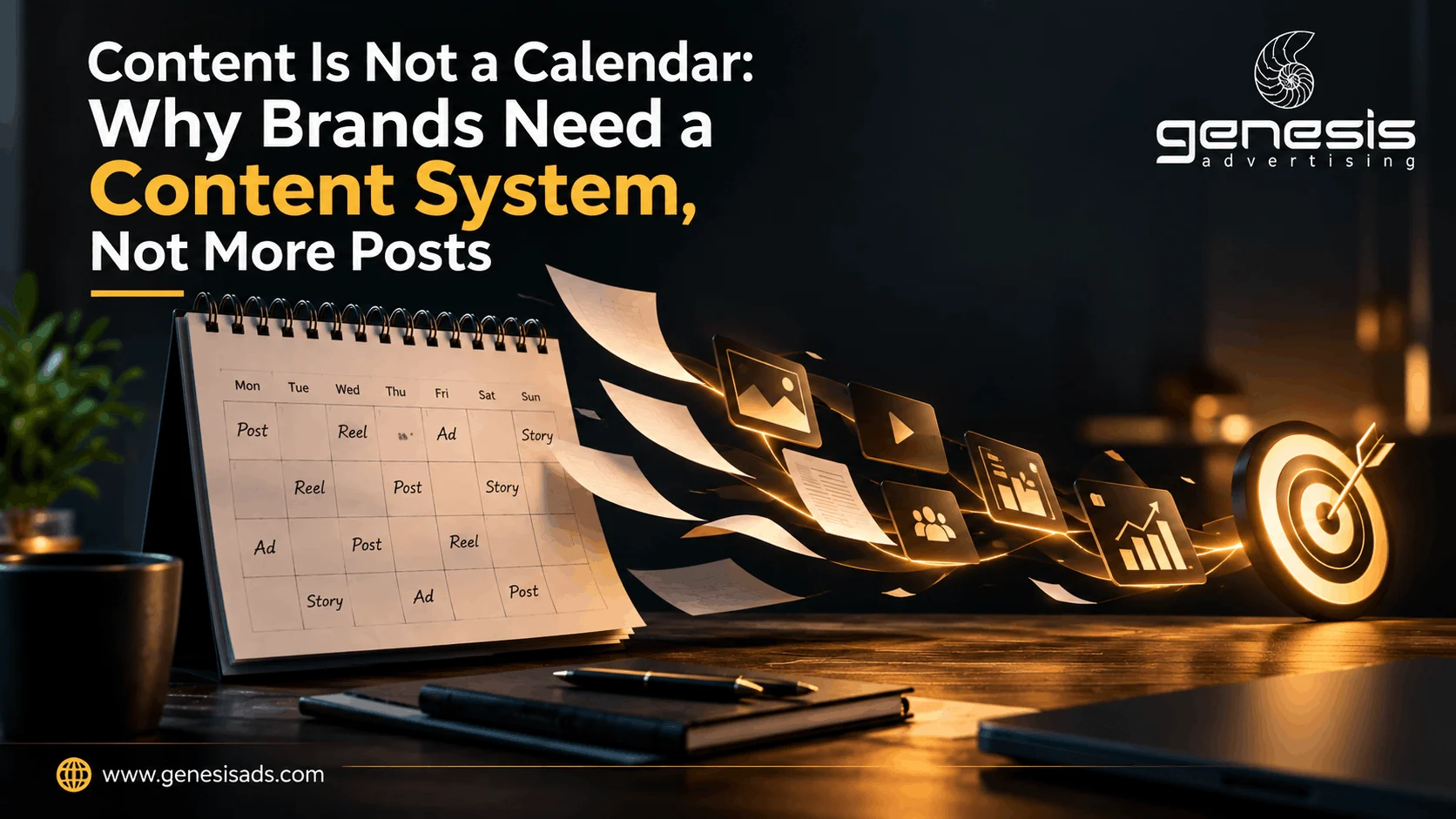
Content Is Not a Calendar:
Why Brands Need a Content System, Not More Posts
“A full content calendar can still produce an empty brand.”
For years, brands have treated content marketing like a scheduling exercise. Monday needs a post. Wednesday needs a reel. Friday needs another creative. The calendar looks full, the team stays busy and content keeps going live.
But being active is not the same as being strategic.
At Genesis Advertising, we believe effective content marketing begins with a system—not a schedule. A calendar tells you when to publish. A content system defines why you are publishing, what the brand should communicate, who needs to see it and how every piece contributes to a larger marketing objective.
Start With the Brand, Not the Post
Before deciding what goes on Instagram next Tuesday, brands need clarity about their positioning.
What should people remember about the brand? What makes it different? What problems does it solve? What tone should it own?
A strong brand strategy gives content a clear direction. Without that foundation, even beautifully designed posts can feel disconnected.
When brand positioning is clear, content becomes an extension of the brand rather than a collection of individual creatives.
Build Content Pillars That Create Consistency
Content pillars help brands move beyond random posting.
Depending on the business, these pillars could include education, product benefits, customer stories, industry expertise, brand culture, entertainment and promotional communication.
The objective isn’t to repeat the same message. It is to build familiar themes that audiences begin associating with the brand.
This consistency strengthens both brand recognition and the overall content marketing strategy.
One Idea Should Work Across Multiple Platforms
Every platform behaves differently, but that doesn’t mean brands need a completely new idea for every channel.
A strong campaign idea can become a blog article, Instagram carousel, reel, LinkedIn post, short-form video, email, website content or paid advertisement.
This is where content repurposing becomes valuable.
Instead of constantly asking, “What should we post next?”, marketing teams can ask, “How many meaningful ways can we communicate this idea?”
At Genesis Advertising, we see this as creating a connected content ecosystem where strategy, creative and distribution work together.
Adapt the Message, Not the Brand
A LinkedIn audience may expect insight. Instagram may demand stronger visual storytelling. Search content needs relevance and clarity, while advertising needs a sharper reason to act.
The format changes. The brand shouldn’t.
Maintaining a consistent brand voice while adapting content for different platforms helps create a recognisable identity across the customer journey.
Measure What the Content Is Building
Content performance shouldn’t end with likes and views.
Brands should also consider reach, engagement quality, website visits, enquiries, conversions, search visibility and, over time, brand recall.
Measurement helps identify which themes, formats and messages deserve greater investment.
From Content Calendar to Content Ecosystem
A content calendar remains useful—but it should be the final layer of the strategy, not the strategy itself.
Strong content marketing connects brand positioning, audience understanding, content pillars, creative consistency, platform adaptation, distribution and measurement.
Because the goal isn’t simply to publish more.
It is to make every piece of content build something bigger.
Genesis Advertising believes the brands that stand out won’t necessarily be those producing the most content. They will be the ones creating content that consistently sounds, looks and feels like them.