

Michelin
Michelin: The Story of the World’s Most Famous Tyre Brand
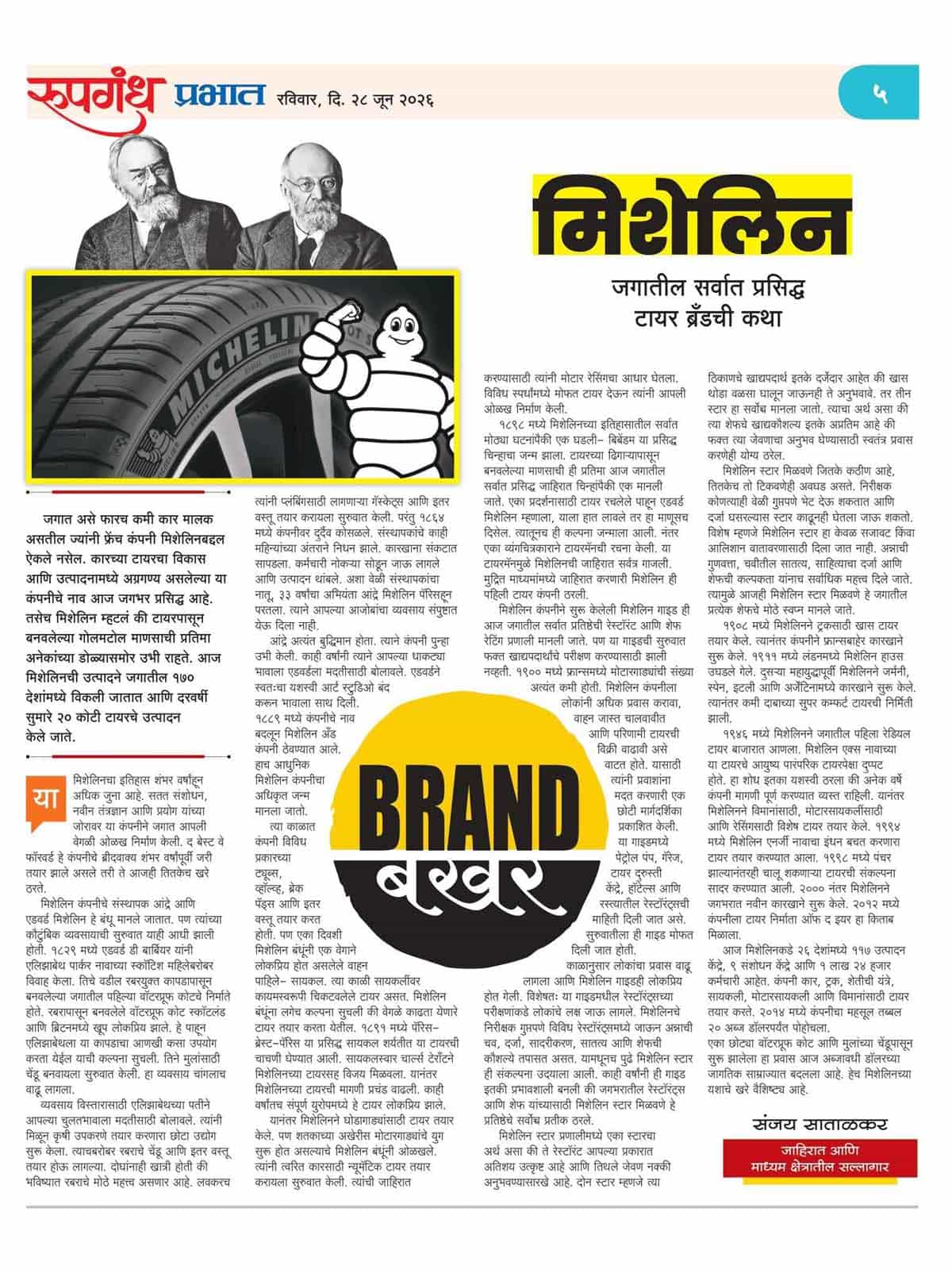
There are very few car owners in the world who have not heard of the French company Michelin. Known as one of the pioneers in tyre development and manufacturing, Michelin today is recognized globally. Whenever people hear the name “Michelin,” many immediately imagine the famous round, white man made of tyres. Today, Michelin products are sold in 170 countries, and the company produces nearly 200 million tyres every year.
Michelin’s history is more than a hundred years old. Through continuous research, innovation, and experimentation, the company created a unique identity for itself worldwide. Its slogan, “The Best Way Forward,” may have been created more than a century ago, but it still remains true even today.
The founders of Michelin are considered to be the brothers André and Édouard Michelin. However, the roots of the family business go back even further. In 1829, Édouard Daubrée married a Scottish woman named Elizabeth Pugh Barker. Her father was known for creating one of the world’s first waterproof coats made from rubberized fabric. These waterproof coats became extremely popular in rainy Scotland and Britain. Seeing this success, Elizabeth began thinking about other uses for rubberized fabric. She started making rubber balls for children, and the business soon grew rapidly.
To expand the business, Elizabeth’s husband invited his cousin to help. Together, they started a small industry manufacturing agricultural equipment. Alongside this, they continued producing rubber balls and other rubber products. Both strongly believed that rubber would become very important in the future. Soon, they also started manufacturing gaskets and plumbing-related products. But in 1864, tragedy struck the company. Both founders died within a few months of each other. The factory fell into crisis. Workers began leaving, and production stopped. At that difficult time, the founders’ grandson, 33-year-old engineer André Michelin, returned from Paris. He refused to let his family business disappear.
André was highly intelligent. He rebuilt the company. A few years later, he called his younger brother Édouard to join him. Édouard shut down his successful art studio to support his brother. In 1889, the company was renamed “Michelin & Company.” This is considered the official birth of the modern Michelin company.
At that time, the company produced tubes, valves, brake pads, and other products. But one day, the Michelin brothers noticed a rapidly growing vehicle the bicycle. During those days, bicycle tyres were permanently glued to the wheels. The Michelin brothers immediately realized that removable tyres could be a revolutionary idea. In 1891, these tyres were tested in the famous Paris–Brest–Paris bicycle race. Cyclist Charles Terront won the race using Michelin tyres. After this victory, the demand for Michelin tyres increased tremendously. Within a few years, they became popular across Europe.
Michelin then began manufacturing tyres for horse carriages. But by the end of the century, the brothers realized that the era of automobiles was beginning. They quickly started producing pneumatic tyres for cars. To promote them, they used motor racing as a marketing platform. By supplying free tyres for various competitions, they successfully built the company’s reputation.
In 1898, one of the most important moments in Michelin’s history took place the birth of the famous “Bibendum” symbol. This mascot, shaped like a man made from stacked tyres, is today considered one of the world’s most iconic advertising symbols. During an exhibition, Édouard Michelin saw a stack of tyres and remarked, “If you added arms, it would look like a man.” That simple thought led to the creation of the mascot. Later, a cartoon artist designed the famous “Tyre Man.” The mascot became extremely popular and made Michelin advertisements famous everywhere. Michelin also became the first tyre company to advertise extensively in print media.
The “Michelin Guide,” started by Michelin, is today considered the world’s most prestigious restaurant and chef rating system. However, the guide was not originally created to review food. In 1900, there were very few automobiles in France. Michelin wanted people to travel more, drive more vehicles, and ultimately increase tyre sales. To encourage this, the company published a small travel guide for motorists. The guide included information about petrol pumps, garages, tyre repair centers, hotels, and roadside restaurants. Initially, the guide was distributed free of cost.
Over time, travel increased, and the Michelin Guide also became more popular. People especially started paying attention to its restaurant reviews. Michelin inspectors secretly visited restaurants to evaluate food taste, quality, presentation, consistency, and the chef’s skills. From this process emerged the concept of the “Michelin Star.” A few years later, the guide became so influential that earning a Michelin Star became the highest symbol of prestige for restaurants and chefs worldwide.
In the Michelin Star system, one star means the restaurant is extremely good in its category and worth visiting. Two stars mean the food is so exceptional that it is worth making a special detour to dine there. Three stars represent the highest honor. It means the chef’s cooking is so extraordinary that the dining experience alone is worth planning an entire journey around.
Winning a Michelin Star is difficult, but maintaining it is even harder. Inspectors can visit secretly at any time, and if standards fall, stars may be removed. Importantly, Michelin Stars are not awarded merely for luxury décor or expensive interiors. The highest importance is given to food quality, consistency of taste, quality of ingredients, and the chef’s creativity. That is why earning a Michelin Star is still considered one of the greatest dreams for chefs around the world.
In 1908, Michelin introduced special tyres for trucks. Later, the company expanded beyond France and established factories in different countries. In 1911, “Michelin House” was opened in London. Before World War II, Michelin had already started factories in Germany, Spain, Italy, and Argentina. The company later developed low-pressure “super comfort” tyres.
In 1946, Michelin introduced the world’s first radial tyre. Called the “Michelin X,” this tyre lasted twice as long as traditional tyres. The invention became so successful that the company spent years trying to meet demand. Later, Michelin developed special tyres for aircraft, motorcycles, and racing vehicles. In 1994, Michelin introduced the “Michelin Energy” tyre designed for fuel efficiency. In 1998, the company presented tyres that could continue running even after a puncture. After 2000, Michelin opened new factories across the world. In 2012, the company received the title “Tyre Manufacturer of the Year.”
Today, Michelin operates 117 manufacturing centers in 26 countries, along with 9 research centers and more than 124,000 employees. The company manufactures tyres for cars, trucks, agricultural machinery, bicycles, motorcycles, and aircraft. In 2014, Michelin’s revenue reached nearly 20 billion dollars.
What started with a simple waterproof coat and children’s rubber balls has today transformed into a global empire worth billions of dollars. That is the true strength of Michelin’s success story.
Author: Sanjay Satalkar
Advertising and Marketing Consultant