

Louis Vuitton
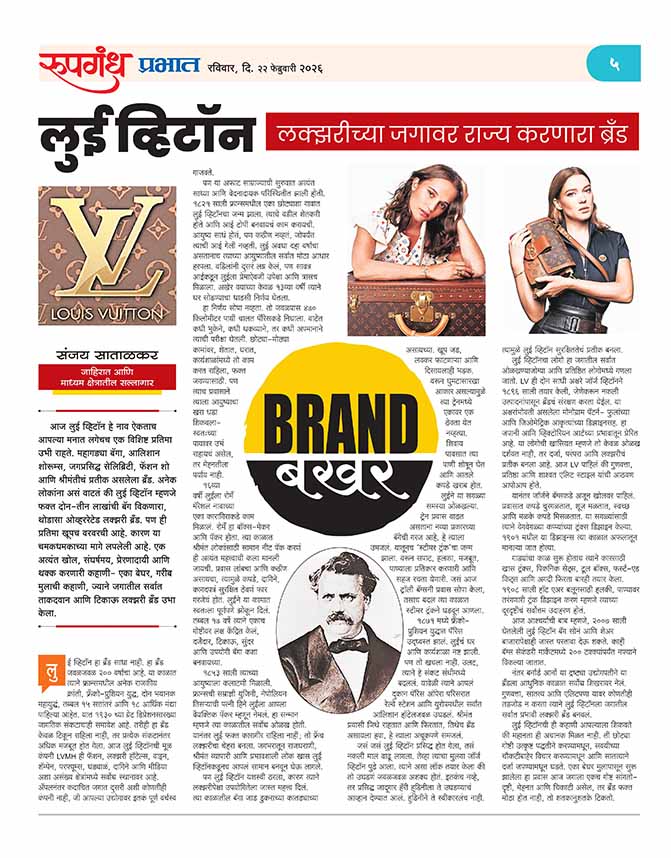
Louis Vuitton: The Brand That Rules the World of Luxury
The moment we hear the name Louis Vuitton, a clear image forms in our mind—expensive bags, luxurious showrooms, world-famous celebrities, fashion shows, and a brand that represents wealth. Many people think Louis Vuitton is just a brand that sells handbags worth two or three lakh rupees, an overrated luxury label. But this image is very superficial. Behind all the glamour lies a deep, struggling, inspiring, and astonishing story—the story of a poor, homeless boy who built one of the strongest and most lasting luxury brands in the world.
Louis Vuitton is not an ordinary brand. It is nearly 200 years old. During this time, it has witnessed many political revolutions in France, the Franco-Prussian War, two terrible World Wars, around 15 changes of government, and 18 economic recessions, including the Great Depression of 1930. Yet the brand did not just survive; it became stronger after every crisis. Today, its parent company LVMH stands at the top in many fields such as fashion, luxury hotels, wine, champagne, perfumes, watches, jewelry, and media. After Apple, there may be no other company in the world that dominates its industry so completely.
But this huge empire began in very simple and painful circumstances. In 1821, Louis Vuitton was born in a small village in France. His father was a farmer, and his mother made hats. Life was simple, but not unbearable—until his mother passed away. When Louis was only ten years old, he lost the biggest support in his life. His father remarried, but instead of love, Louis received neglect and mistreatment from his stepmother. Finally, at the age of just 13, he made the brave decision to leave home.
This decision was not easy. He walked nearly 470 kilometers to Paris. On the way, he faced hunger, exhaustion, and humiliation. He worked in farms, homes, and workshops, taking up small jobs just to survive. But this journey taught him an important life lesson—if you want to stand on your own feet, there is no substitute for hard work.
At the age of 16, Louis found work with a craftsman named Romain Maréchal, who was a box-maker and packer. At that time, packing luggage properly for wealthy people was considered a very important skill. Travel was long and difficult, so it was essential to keep clothes, jewelry, and documents safe. Louis dedicated himself completely to this craft. For 17 years, he focused on one thing—how to make bags that were high-quality, durable, beautiful, and practical.
In 1853, his life changed. Empress Eugénie, the wife of Napoleon III, appointed Louis as her personal packer. This was one of the highest honors of that time. After this, Louis was no longer just a craftsman; he became the face of French luxury. Royal families, rich merchants, and influential people from around the world began ordering their luggage from Louis Vuitton.
Louis Vuitton succeeded because he gave more importance to usefulness than just luxury. At that time, bags were made of thick pigskin leather. They were very heavy, tore easily, and looked flashy. Their dome-shaped tops made it impossible to stack them in trains. They also absorbed water in the rain, damaging the clothes inside.
Louis identified all these problems. As train travel increased, he understood the need for a new type of bag. This led to the creation of the “steamer trunk.” It was flat on top, lightweight, strong, water-resistant, and easy to stack. Just as trolley bags have made travel easy today, the steamer trunk brought a revolution in travel during that time.
In 1871, during the Franco-Prussian War, Paris was destroyed. Louis’s home and workshop were ruined. But he did not lose hope. Instead, he turned the crisis into an opportunity. He opened his store in the Paris Opera area, near the railway station and Europe’s most luxurious hotels. He understood clearly that a brand must be where wealthy travelers stay and move around.
As Louis Vuitton became more famous, counterfeit products increased. His son Georges Vuitton stepped forward and created a lock that was almost impossible to open. The famous magician Harry Houdini was even challenged to open it, but he did not accept the challenge. This made Louis Vuitton a symbol of security.
The Louis Vuitton logo is considered one of the most recognizable and prestigious logos in the world. The simple letters “LV” were created by Georges Vuitton in 1896 to protect the brand from counterfeits. The monogram pattern around these letters, with floral and geometric designs, was inspired by Japanese and Victorian art. This logo does not just represent identity; it stands for quality, tradition, and luxury. Today, when we see “LV,” we automatically think of excellence, prestige, and timeless elite style.
Georges also studied travel needs more deeply. Clothes get wrinkled during travel, shoes get dirty, and clean and dirty clothes get mixed. To solve these problems, he designed trunks with separate compartments. His 1901 designs were considered extraordinary at that time.
When the era of automobiles began, he designed special trunks for cars, picnic sets, tool boxes, first-aid kits, and even portable bars. In 1908, he designed a lightweight trunk for hot air balloons that could float on water. This showed his remarkable vision and forward thinking.
It is surprising that a Louis Vuitton bag bought in 2007 could give better returns than gold or the stock market. Some bags are resold in the secondary market at profits of up to 200 percent.
Later, visionary businessman Bernard Arnault took the brand to the highest level in the modern era. Without compromising on quality, consistency, or exclusivity, he made Louis Vuitton one of the most powerful luxury brands in the world.
The story of Louis Vuitton teaches us that greatness does not come suddenly. It is built by doing small things exceptionally well, thinking beyond conventional limits, and maintaining quality consistently. The journey that began with a homeless boy today tells the world one simple truth—if you have vision, hard work, and determination, a brand does not just grow big; it lasts for generations.
Author: Sanjay Satalkar
Advertising and Marketing Consultant