

Parachute
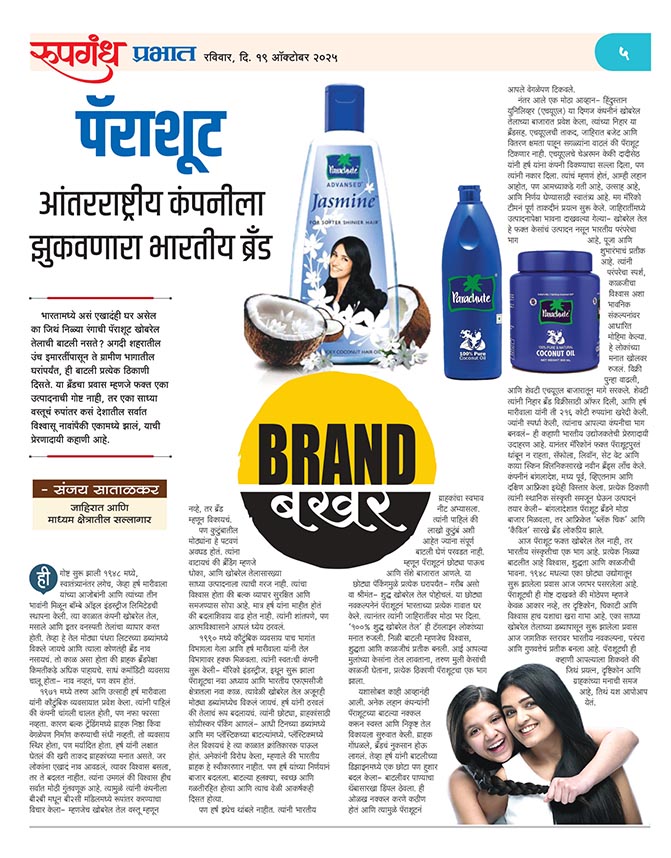
Parachute – The Indian brand that made an international company bow down
There may not be a single home in India that does not have a blue bottle of Parachute Coconut Oil sitting on a shelf. The journey of this iconic brand is not just a tale of a product, but a story of transformation — of how a simple, everyday commodity became one of India’s most trusted household names. It all began in 1948, soon after independence, when the grandfather of Mr. Harsh Mariwala along with his three brothers established the Bombay Oil Industries Limited. At that time, the company dealt mainly in coconut oil, spices, and other vegetable oils, selling them in bulk to industrial clients. It was a pure B2B business, selling oil as a commodity, without any name or brand attached to it. The oil used to be packed in large fifteen-litre tins and traded in wholesale markets. The concept of branded, packaged oil for individual consumers was almost unheard of in those days.
In 1971, a young and ambitious Harsh Mariwala joined the family business. When he entered, he realized that though the company was doing well, the profits were thin. The bulk-trading model had limitations — there was little room to build customer loyalty or differentiate from competitors. Harsh observed that real power lay in the consumer’s mind. If people could recognize, trust, and love a brand, they would never shift to another. He began to think of moving the company from a B2B to a B2C model, from selling coconut oil as a mere commodity to selling it as a brand. But convincing his family was not easy.
The older generation believed that branding was risky and unnecessary, especially for a simple product like coconut oil. For them, trading in bulk was safe, predictable, and well-understood. Yet Harsh was determined to prove that there was a bigger opportunity waiting beyond the comfort zone.
As the years passed, the differences in vision within the family grew. In 1990, the family decided to split the Bombay Oil Industries into five separate divisions. Harsh got control of the oil business, and with that, he set out on his own entrepreneurial journey. He formed a new company — Marico Industries. This marked the beginning of a new era. Harsh wanted to create something enduring, something that would carry trust into people’s homes. He decided to convert coconut oil from a nameless commodity into a consumer brand. The oil was already being sold under the family’s existing label “Parachute,” a name originally chosen years ago because it was easy to remember and carried a sense of safety and reliability. Harsh decided to keep the name and build a brand identity around it.
At that time, coconut oil was still sold in big tins without labels. Harsh knew that to make Parachute stand out, it needed a new face. He introduced smaller, consumer-friendly packages — first in tin cans and soon after in plastic bottles. The decision to use plastic was revolutionary. Many in the market resisted the change, claiming that Indians would never accept oil in plastic bottles. But Harsh’s intuition proved right. Plastic bottles were convenient, lighter, and leak-proof. They also made the oil look cleaner and more appealing.
Yet, he didn’t stop there. He understood India’s diverse market — that millions of households lived on low incomes and couldn’t afford to buy a full bottle. To reach this segment, Parachute introduced smaller pouches and sachets. This step changed everything. Suddenly, every family — rural or urban, rich or poor — could afford pure coconut oil. Sales soared, and Parachute began to find its way into every part of the country.
To strengthen the brand, Harsh launched aggressive advertising campaigns through newspapers, radio, and television. The simple tagline “100% Pure Coconut Oil” became the cornerstone of Parachute’s image. It built immense trust among consumers who saw coconut oil not only as a product but as a symbol of purity and tradition. The blue bottle became synonymous with quality. Slowly and steadily, Parachute was no longer just oil; it was a ritual of care — mothers massaging their children’s hair, young women nourishing their beauty, and families relying on it for generations.
However, with success came challenges. As Parachute’s popularity grew, smaller players from the unorganised sector began to imitate its packaging and sell low-quality oil at cheaper prices. These fake products confused consumers and hurt the brand’s reputation. Harsh quickly realized that imitation would continue unless he made Parachute’s packaging unique. After months of brainstorming, he introduced a distinctive bottle design with a small drop-shaped dimple — a unique identity that counterfeiters found difficult to replicate. This tiny design element became a secret weapon against duplication and helped Parachute protect its authenticity.
But Harsh was not only fighting counterfeiters. He also wanted to make the brand stronger in rural India, where most of the country’s population lived. He expanded the distribution network and designed attractive incentive schemes for retailers based on their sales volume. This motivated shopkeepers to promote Parachute more actively. Soon, blue bottles filled shop shelves from city supermarkets to remote village stores.
Just when everything seemed perfect, a big storm hit. Hindustan Unilever Limited (HUL), the giant of India’s FMCG industry, decided to enter the coconut oil market with their own brand — Nihar. At that time, Parachute was the clear leader with nearly 48% market share. HUL’s entry created panic across the industry. With its deep pockets and enormous advertising budgets, HUL offered higher margins to retailers and launched heavy marketing campaigns. Within a short span, HUL managed to capture about 15% of the market. It looked like Parachute’s dominance was in real danger.
One day, HUL chairman Mr. Keki Dadiseth approached Harsh Mariwala with a takeover offer. He told Harsh that Marico would never be able to compete with a company as large and powerful as HUL, and that selling the company would be the wiser decision. Harsh politely declined. Dadiseth then warned him that HUL would crush Parachute and make him regret his decision. But Harsh was undeterred. He observed that being a smaller company was actually an advantage — Marico could move faster, take quicker decisions, and rely on the passion of a tightly knit team. While HUL needed multiple approvals to make changes, Marico could react within days.
Harsh rallied his team and prepared for battle. Advertising budgets were increased. The brand messaging was refined. Instead of focusing only on product benefits, Parachute’s campaigns began highlighting the cultural and emotional bond between coconut oil and Indian tradition. The ads portrayed coconut oil as a sacred and pure element — something used in Hindu rituals, something that symbolized purity and auspicious beginnings. This deep emotional connection resonated with Indian consumers. Sales began to recover, loyalty strengthened, and slowly, the tide turned. HUL’s market share started dropping from 15% down to about 8%.
Realizing that coconut oil was not their strength, HUL eventually decided to exit the segment and approached Marico with an offer to sell the Nihar brand. Harsh Mariwala accepted the offer and bought Nihar for around ₹216 crores, thereby turning his biggest rival into a valuable asset. The episode was a turning point not only in Marico’s history but also in Indian business history — it was a story of a David who dared to stand up to Goliath and emerged stronger than ever.
After defeating such a giant competitor, Harsh focused on long-term growth. He knew that no brand could survive forever on a single product, no matter how successful. To ensure sustainable expansion, he diversified Marico’s portfolio. The company launched Saffola, an edible oil brand positioned around heart health and fitness. It soon became a household name among health-conscious Indians. Marico also ventured into the personal grooming space with brands like Livon, Set Wet, and later acquired Kaya Skin Clinic, offering skincare solutions. Each brand was built on the same foundation of quality, trust, and innovation that had made Parachute successful.
Harsh’s dream was to see Marico as a global FMCG giant. With this vision, the company began expanding internationally. It entered Bangladesh, where Parachute quickly became a market leader. Then came new territories — the Middle East, Vietnam, and South Africa. In these regions, Marico introduced new brands such as Code 10, X-Men, Black Chic, and Caivil, each tailored to local preferences and lifestyles. The success of these products established Marico as an international player and proved that an Indian company could compete globally with the world’s best.
The Parachute story carries many lessons. It shows how innovation can breathe life into even the simplest of products. It highlights the importance of understanding the consumer, respecting tradition while embracing modernity, and the courage to face competition head-on. Harsh Mariwala transformed a humble household oil into a brand that millions trust. He understood the psychology of Indian consumers — their love for purity, their value consciousness, and their emotional attachment to tradition. By connecting with these sentiments, Parachute became more than oil — it became a part of Indian culture.
Today, Parachute stands as an undisputed market leader in the coconut oil segment, commanding nearly half of India’s market share. It enjoys an extraordinary level of loyalty that few brands in the world can claim. Every blue bottle symbolizes decades of trust and purity. From the lanes of small villages to the supermarkets of global cities, Parachute has become a silent yet strong companion in everyday life.
The journey that began in a small family-run Bombay Oil Industry in 1948 has turned into a multinational success story that inspires entrepreneurs across the world. It reminds us that size and power do not always determine success; vision, agility, and perseverance do. From selling oil in large tins to becoming a global symbol of purity and care, Parachute has come a long way. It continues to grow, adapt, and innovate — yet its heart remains the same: 100% pure, just like the trust it has built in millions of hearts across generations
Written by: Sanjay Satalkar
Consultant – Advertising and Marketing