

Adidas and Puma
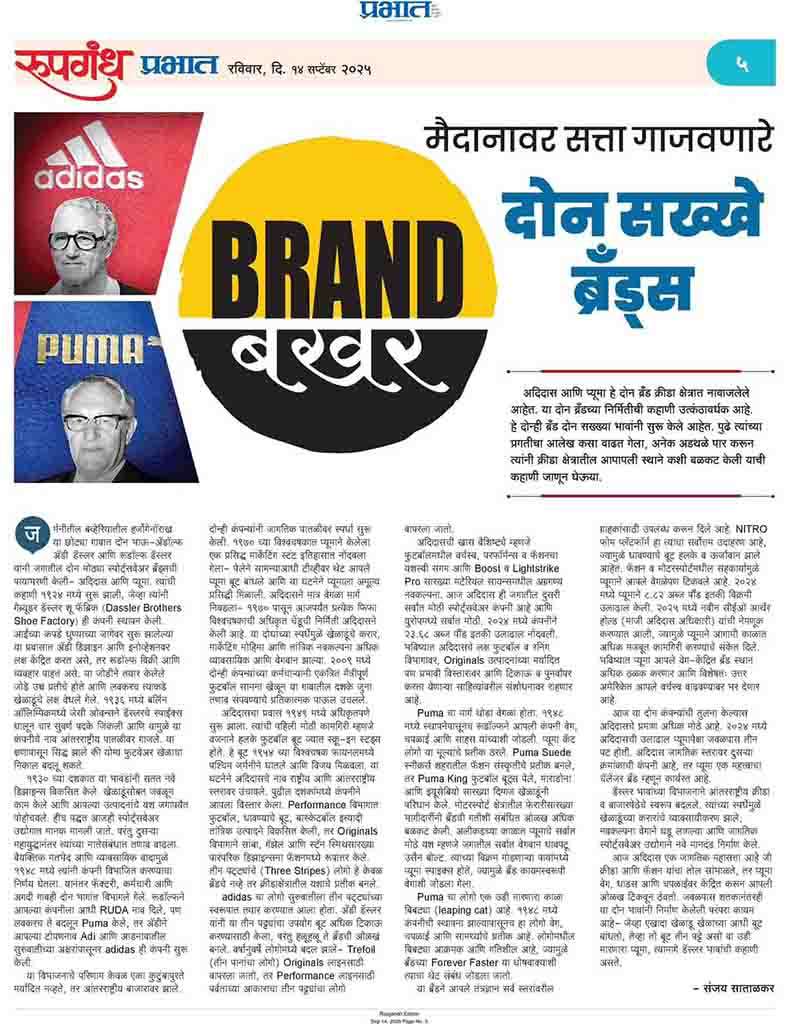
Sibling Rivalry That Shaped the Sports Arena
Two rival brands that came to dominate the sports field were born in the small German town of Herzogenaurach, Bavaria. Two brothers—Adolf “Adi” Dassler and Rudolf Dassler—laid the foundation for two of the world’s biggest sportswear brands, Adidas and Puma.
Their story began in 1924, when they started the company Gebrüder Dassler Schuhfabrik (Dassler Brothers Shoe Factory). What began in their mother’s laundry room soon grew into a full-fledged business. Adi focused on design and innovation, while Rudolf took charge of sales and business operations. The shoes they created were of exceptional quality and quickly caught the attention of athletes.
In 1936, Jesse Owens won four gold medals at the Berlin Olympics wearing Dassler spikes, bringing international fame to the company. This became a milestone in brand promotion, showing how the right footwear could change the outcome of a game. Throughout the 1930s, the brothers introduced new designs, worked closely with athletes, and carried out strong advertising campaigns to spread their success stories worldwide. This approach became an industry standard in sportswear.
However, after World War II, tensions grew between the brothers. Personal disputes and business disagreements led to a split in 1948. The factory, employees, and even the town were divided. Rudolf first named his company RUDA, later changing it to Puma, while Adi created Adidas from his nickname “Adi” and part of his surname.
The split did not just affect the family—it reshaped the global market. Both companies began competing fiercely in branding and advertising strategies. Puma made headlines in the 1970 World Cup with a brilliant marketing stunt—Pelé tied his Puma boots live on TV before the match, giving the brand priceless exposure. Adidas chose another path: since 1970, it has produced the official FIFA World Cup ball, turning this into a long-term brand campaign.
This rivalry pushed athlete contracts, brand sponsorships, marketing campaigns, and technical innovations to new levels of professionalism and speed. In 2009, employees from both companies symbolically ended decades of tension by playing a friendly football match.
Adidas officially began in 1949. Its first big success was lightweight football boots with screw-in studs, worn by West Germany in the 1954 World Cup final, which they won. This victory made Adidas a household name nationally and internationally. Over the following decades, the company expanded. Its Performance division developed technical products like football boots, running shoes, and basketball gear, while Originals transformed classic designs like Samba, Gazelle, and Stan Smith into fashion icons.
The famous Three Stripes logo became not just a brand identity but a symbol of success in sports. Initially, Adi Dassler used the three stripes for durability, but over time they became a powerful branding tool. Later, Adidas introduced different logos: the Trefoil (three-leaf) for Originals, and the mountain-shaped three stripes for Performance.
Adidas’ strengths lie in football dominance, the blend of performance and fashion, and innovations in material science such as Boost and Lightstrike Pro. Today, Adidas is the second-largest sportswear company in the world and the largest in Europe, with €23.68 billion in revenue in 2024. Its future focus remains on football and running, selective expansion of Originals, and sustainable materials research.
Puma’s path was different. Founded in 1948, Rudolf built his company around speed, agility, and adventure. The Puma Cat logo perfectly symbolized these values. Puma Suede sneakers became cultural fashion icons, while Puma King football boots were worn by legends like Pelé, Maradona, and Eusébio. Partnerships in motorsport, including Ferrari, strengthened its association with speed.
In recent years, Puma’s biggest branding success was its association with the world’s fastest man, Usain Bolt. His record-breaking performances in Puma spikes forever tied the brand with speed. The leaping cat logo, since 1948, has represented power, agility, and dynamism, directly linked with the slogan “Forever Faster.”
Puma made its technology accessible to a wide audience, with innovations like the NITRO foam platform that made running shoes lighter and more energetic. Collaborations in fashion and motorsport kept Puma’s brand campaigns fresh and differentiated. In 2024, Puma recorded €8.82 billion in sales. In 2025, Arthur Hoeld (a former Adidas executive) was appointed CEO, signaling stronger future performance. Puma aims to sharpen its speed-centered brand positioning and expand particularly in North America.
Comparing the two brands today, Adidas is much larger, with nearly three times Puma’s revenue in 2024. Adidas is the world’s second-largest sportswear company, while Puma continues as a powerful “challenger brand.”
The Dassler brothers’ split changed the sports and global market forever. Their rivalry commercialized athlete sponsorships, accelerated innovation, and set new standards in global sportswear branding.
Today, Adidas is a global powerhouse balancing sports and fashion, while Puma maintains its identity around speed, boldness, and agility. Nearly a century later, the legacy of the Dassler brothers lives on—whether an athlete laces up boots with three stripes or a leaping Puma, the story behind both is rooted in their rivalry.
Written by: Sanjay Satalkar
Consultant – Advertising and Marketing